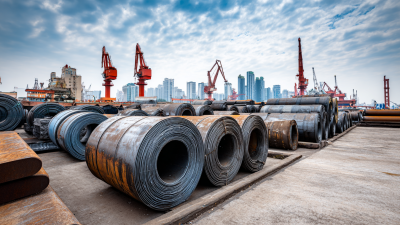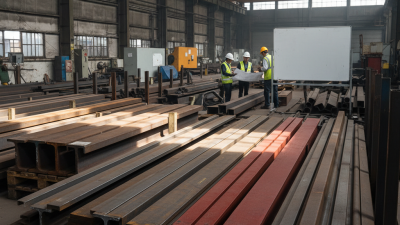
Choosing the best industrial steel in 2026 starts with the job, not the grade name. A beam supporting a warehouse roof faces different demands from a stainless tank near salt spray. Buyers should compare strength, corrosion resistance, weldability, formability, availability, and total delivered cost. The strongest option is not automatically the best one. Not even close.
Metallurgist George Krauss’s published work on steel offers a useful takeaway, paraphrased here: “Steel performance depends on composition and processing, not the grade label alone.” That distinction matters when two products carry similar descriptions but differ in heat treatment, tolerances, or traceability. Ask suppliers for mill test certificates, relevant standards, and clear product specifications. Check that documents match the delivered batch. A certificate is useful, but it does not replace careful inspection.
This guide compares common industrial steel choices for buyers balancing service conditions, fabrication needs, lead times, and budgets. Carbon steel may suit a dry, load-bearing application; stainless steel can help where corrosion is a concern; alloy grades may meet demanding strength or temperature requirements. Each choice has trade-offs. A coating can chip. A premium grade can add cost without solving the real problem. Buyers should confirm requirements with a qualified materials engineer or fabricator before placing a large order. Even careful selection has limits, and that deserves a second look.
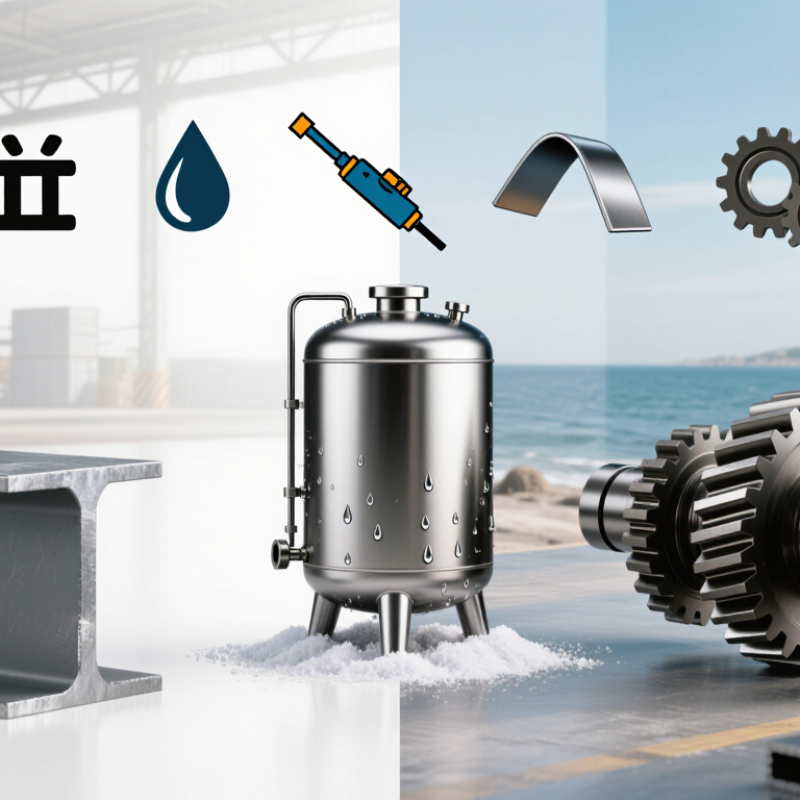
The best industrial steel in 2026 is the grade that fits its actual service conditions—not simply the strongest option on a supplier’s list. Start with loads: record peak weight, repeated cycles, impact, and connection details. A plate supporting a steady machine behaves differently from a bracket exposed to vibration. Specify the required strength and toughness, then check material certificates against the purchase specification. Small details matter.
Corrosion and temperature can change the choice. AMPP’s IMPACT study estimated corrosion costs at US$2.5 trillion annually, or 3.4% of global GDP, based on 2013 data. That estimate is not a steel-selection formula, but it shows why exposure deserves careful review. Note whether the steel faces salt spray, chemicals, standing water, or temperature swings. Then verify the applicable design rules: AISC 360 for many U.S. building structures, EN 1993 for relevant European designs, or the governing pressure-equipment code where applicable. This step is easy to rush—and it can be.
Tips: Write a one-page service brief before requesting quotes. Include load cases, environment, operating-temperature range, design life, and jurisdiction. Ask an engineer to confirm the code edition and grade. A familiar grade may still be the wrong fit.
What Is the Best Industrial Steel for Buyers in 2026?
Compare Structural Grades: ASTM A36 (36 ksi) vs A572 Grade 50 (50 ksi)
For many structural projects, the choice comes down to ASTM A36 or ASTM A572 Grade 50. A36 has a minimum yield strength of 36 ksi, while Grade 50 reaches 50 ksi. That is a meaningful difference. Under the right design conditions, Grade 50 can support a lighter section or carry more load in the same space.
But stronger steel does not automatically make a better structure. Deflection, buckling, connection design, and member geometry still matter. A beam may meet a strength check yet feel too flexible in service. A36 is often a practical fit for general plates, frames, and simpler fabrication. Grade 50 can be useful where reducing member weight or size matters, though the savings should be checked against material and fabrication costs.
The details deserve attention. Confirm the required specification, product form, thickness, and current mill documentation before ordering; properties and availability can vary. Welding and forming plans should also match the selected grade and project requirements. One common misstep is choosing by yield strength alone. It is an easy shortcut, and not always a good one. A quick review with the project’s structural engineer can catch trade-offs that a grade comparison misses.
For buyers comparing industrial stainless steel in 2026, 304 and 316 can look nearly identical on a warehouse rack. Their alloy differences matter once the service environment is clear. Grade 304 typically contains 18–20% chromium, which supports corrosion resistance in many indoor and mildly corrosive applications. Think food-preparation surfaces, equipment frames, and general-purpose tanks. It is often the practical choice when exposure to salt and chlorides is limited.
Grade 316 typically contains about 2–3% molybdenum, improving resistance to pitting in chloride-rich settings. That can make it a stronger candidate for coastal equipment, chemical process areas, or washdown zones where salt may remain on surfaces. Better, but not invulnerable. Poor drainage, deposits, and unsuitable cleaning practices can still cause corrosion. A smooth finish and sound fabrication matter too.
Price should not decide the grade alone. Compare the expected chemical exposure, operating temperature, cleaning routine, and maintenance access against the material specification. For example, a 304 component kept dry indoors may outperform a poorly finished 316 part left under salty deposits. There is a catch: alloy labels do not describe every production detail. Confirm the grade through purchasing documents, and review welds and surface condition before installation. I would not choose 316 merely because it sounds safer; that assumption deserves a second look.
For buyers comparing industrial steel in 2026, start with the product form, not just the grade. ASTM A500 covers cold-formed welded or seamless carbon-steel structural tubing, commonly used for columns, frames, and supports. A53 covers steel pipe for pressure and mechanical applications, including water, air, and steam lines. Similar-looking hollow sections are not interchangeable. Check the specified dimensions, wall thickness, grade, and applicable edition before ordering.
A312 is for austenitic stainless-steel pipe, including seamless and welded products, where corrosion resistance and service conditions matter. A36, by contrast, is a carbon-steel specification for structural shapes, plates, and bars—not a pipe specification. The distinctions affect fabrication and inspection. Small detail. A coating will not make an unsuitable specification suitable.
The World Steel Association’s World Steel in Figures 2024 reports 1,892.2 million tonnes of crude steel production in 2023, showing the scale of a broad, varied market—not that every product meets every need. That distinction is easy to overlook.
Review mill test reports and confirm that the ordered form and standard match the design documents; when service conditions are unclear, pause and verify them with a qualified engineer.
Choosing industrial steel in 2026 means comparing the cost of ownership, not just the price per ton. A lower-cost carbon steel may suit a dry, sheltered frame, while a corrosive plant environment can require more protective coatings or frequent maintenance. Those expenses add up. Ask how the steel will perform through its expected service life, including inspection, repair, and downtime.
Fabrication needs can change the calculation. A high-strength grade may reduce component weight, but it can require tighter control during cutting, forming, and welding. Check the shop’s equipment and procedures before selecting a specification. A familiar grade may be easier to fabricate, though it is not automatically the best fit. That deserves a second look.
Lead times also vary with thickness, dimensions, and availability. Standard stock may arrive sooner than a specialized grade, but confirm current mill schedules before committing to a production date. Recycled content is another useful comparison point. Request product-specific documentation, since recycled percentages and reporting methods can differ. A practical shortlist should weigh delivered cost, processing time, maintenance demands, and verified material data. There is no perfect choice; even a careful estimate can miss a coating repair or a delayed shipment.