What Are the Best Stainless Steel Grades from China?
Choosing the best stainless steel grades from China requires more than comparing prices or polished surfaces. The correct grade depends on corrosion exposure, mechanical loads, fabrication methods, temperature, and service life. A kitchen sink, chemical tank, coastal railing, and pressure vessel may all need different alloys.
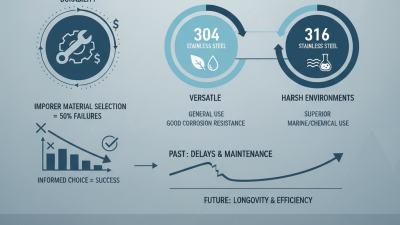
J. R. Davis, editor of the ASM Specialty Handbook Stainless Steels, offers a practical reminder: “There is no universally best stainless steel; there is only the best choice for a specific environment.” That principle matters when evaluating Chinese production. Grade 304 is widely used for general food equipment, architectural parts, and indoor applications. Grade 316L offers stronger resistance to chlorides and marine exposure. Grade 430 can suit decorative panels and low-corrosion environments. Grade 201 may reduce initial cost, but its performance requires careful evaluation.
A simple ranking can mislead.
This guide examines stainless steel grades by application, chemistry, corrosion resistance, strength, availability, and total value. It also considers details buyers sometimes overlook, including surface finish, heat treatment, weld quality, dimensional tolerance, and mill test certificates. Experienced importers should request traceability records and verify material through independent testing when the application is critical. Visual inspection alone is not enough.
Chinese mills produce reliable materials, but quality can vary between suppliers, batches, and production controls. That uncomfortable point deserves attention. The cheapest quotation may become expensive after premature staining, difficult welding, or replacement. A responsible selection combines technical evidence, supplier experience, and realistic service conditions. Even this approach is not perfect, but it is far safer than choosing by grade number alone.
Stainless Steel Grade Categories Commonly Produced in China
China’s stainless steel output is concentrated in several practical grade families. The International Stainless Steel Forum reported global crude stainless production at about 60 million tonnes in 2023, with China supplying more than half. This scale supports broad production of austenitic, ferritic, martensitic, and duplex grades.
Austenitic 304, known in Chinese standards as 06Cr19Ni10, remains the general-purpose choice for kitchen equipment, tanks, and architectural parts. Grade 316, or 022Cr17Ni12Mo2, adds molybdenum for better chloride resistance. It suits coastal equipment and chemical processing, but it is not immune to corrosion. Ferritic 430, commonly designated 10Cr17, offers magnetic behavior, lower nickel content, and useful resistance in indoor applications. It is often selected for appliance panels and decorative components.
Martensitic grades such as 410 and 420 provide higher hardness after heat treatment. They appear in cutlery, shafts, and wear-resistant parts. Duplex 2205 combines strong mechanical performance with improved resistance to stress corrosion cracking. However, welding control becomes more demanding. Data from the World Stainless Association and technical standards show why chemistry alone cannot determine service life. Surface finish, heat treatment, welding quality, and chloride exposure matter greatly. A recurring mistake is treating “304” as a universal answer. It is convenient, but sometimes poorly matched to the environment. Testing certificates should confirm chemical composition, mechanical properties, and production condition before purchase.
What Are the Best Stainless Steel Grades from China?
Stainless Steel Grade Categories Commonly Produced in China
This chart compares representative chromium content by mass for widely produced stainless steel grades. Higher chromium generally supports the formation of a stronger passive corrosion-resistant surface, but the best grade depends on the application, environment, strength requirements, and budget.
Values show the midpoint of typical specification ranges and are presented for comparison: ASTM A240/SA-240 and EN 10088-aligned compositions. Actual product chemistry may vary within the applicable standard.
Key Properties of China’s Most Used Stainless Steel Grades
What Are the Best Stainless Steel Grades from China?
China’s stainless steel industry produced about 36.7 million tonnes in 2023, representing nearly 63% of global output, according to the World Stainless Association’s 2024 statistics. This scale supports wide availability of grades such as 304, 316L, 430, and 201.
Grade 304 remains the general-purpose choice. Its typical 18% chromium and 8% nickel provide reliable corrosion resistance, easy forming, and good weldability. It suits kitchen equipment, tanks, architectural panels, and food-processing components.
316L
offers stronger protection in chloride-rich environments. Its molybdenum content, commonly around 2–3%, improves resistance to pitting and crevice corrosion. The Nickel Institute identifies this advantage in marine and chemical-processing applications. However, 316L costs more and is not automatically better for every project.
That assumption needs questioning. A dry indoor enclosure may gain little from the upgrade.
Grade 430 contains chromium but very little nickel, which helps control material cost. It provides magnetic behavior, moderate corrosion resistance, and useful heat resistance for appliances and decorative parts. Grade 201 replaces much of the nickel with manganese. It can perform well indoors, but it requires stricter exposure control.
ASTM A240 data and mill certificates should confirm chemistry, thickness, and mechanical properties. Field conditions still matter. Salt spray, weld quality, surface finish, and drainage can change performance dramatically.
A polished sample may look convincing, yet poor fabrication can shorten its service life.
Best Stainless Steel Grades for Different Industrial Applications
The best stainless steel grade depends on the working environment, not its country of origin. Chinese mills commonly supply 304, 316L, 430, 2205, and 904L for industrial projects. Each grade solves a different problem.
304 remains a practical choice for food equipment, tanks, architectural panels, and indoor piping. It offers good corrosion resistance and easy fabrication. However, it can suffer pitting near saltwater or chemical cleaning agents. 316L performs better in coastal plants, pharmaceutical rooms, and chemical processing areas because molybdenum improves chloride resistance. Its low carbon content also supports cleaner welded joints.
For heat exchangers, pressure equipment, and structural frames, 2205 duplex stainless steel provides high strength with useful corrosion resistance. It can reduce material thickness, but welding requires tighter control. That detail is often underestimated. 430 suits appliance panels, dry indoor equipment, and decorative components where lower cost matters. It is magnetic and less resistant than 304, especially in wet conditions. 904L serves severe chemical environments, but its price and machining demands require careful justification.
Specification work should include chemical composition, tensile data, heat-treatment records, and positive material identification. Check surface finish under real lighting, not only on photographs. Welded parts need inspection after pickling and passivation. In my experience, grade selection fails when buyers compare only price per kilogram. A cheaper sheet may create higher costs through corrosion, replacement, or downtime. Still, no grade is perfect. Application testing remains wise when temperature, chemicals, or cleaning cycles vary.
How to Compare Chinese Stainless Steel Grades by Performance and Cost
Choosing Chinese stainless steel grades requires more than comparing the mill price per tonne. World Stainless reported China produced about 63% of global crude stainless steel in 2023. This scale supports competitive pricing, but quality still depends on chemistry, rolling control, heat treatment, and inspection. Ask for EN 10204 3.1 certificates and independent testing when the application is critical.
For general corrosion resistance, Grade 304 commonly contains about 18% chromium and 8% nickel, matching ranges in ASTM A240 and EN 10088. Grade 316L adds molybdenum, usually 2–3%, improving resistance in chloride environments. It costs more, yet premature replacement can erase the initial saving. Grade 201 reduces nickel and uses more manganese, which may lower purchase cost. Its corrosion margin is narrower. Grade 430 contains little or no nickel and suits dry indoor applications, but it is less forgiving near saltwater.
Compare total performance, not only chemistry. Review yield strength, elongation, surface finish, thickness tolerance, weldability, and corrosion-test results. The Nickel Institute’s technical guidance shows that chloride exposure strongly affects stainless selection. A simple salt-spray result is not a complete service-life prediction. Costs should include freight, fabrication, welding consumables, cleaning, rejection risk, and maintenance. A cheaper coil may become expensive after one failed installation. My own comparison sheets have sometimes overvalued material savings and undervalued rework. That deserves scrutiny.
Quality Standards for Selecting Stainless Steel from China
What Are the Best Stainless Steel Grades from China?
Selecting stainless steel from China requires more than choosing a familiar grade number. Quality depends on chemistry, processing, inspection, and traceability. Common options include 304 for general corrosion resistance and 316 for chloride exposure. Duplex grades can offer higher strength, but they demand tighter production control.
Ask for a material test certificate for every heat number. Check chromium, nickel, molybdenum, carbon, tensile strength, yield strength, and elongation. The certificate should match the purchase specification and recognized standards, such as ASTM, ASME, EN, or GB. Do not assume similar grade names have identical requirements. Confirm the exact standard revision.
Verify the surface condition carefully. A polished sheet should show consistent reflection, without deep scratches, pits, or uneven polishing lines. For pipes, inspect welds, dimensions, ovality, and internal cleanliness. Positive material identification can confirm alloy chemistry during receiving inspection. It is a small step. It prevents costly mistakes.
Reliable suppliers maintain heat-level traceability from melting to shipment. Request production records, calibration certificates, and independent inspection when the application is critical. Factory audits can reveal storage problems, mixed bundles, or weak document control. I have found certificates useful, but never sufficient alone. Documents can be accurate yet incomplete. Sampling and independent testing remain important, especially when corrosion resistance affects safety, hygiene, or service life. A cheaper grade may appear acceptable until rust forms around a weld. That lesson is easy to overlook.