How to Choose the Right Wire Rod for Your Project?
Choosing the right wire rod is crucial for any project. Different types of wire rods exist, each serving specific purposes. Understanding these differences helps in making informed decisions.
When selecting wire rod, consider the project requirements. Think about strength, flexibility, and corrosion resistance. Each factor impacts the final outcome. For example, if a project needs high tensile strength, a specific alloy might be necessary. A wrong choice can lead to structural failure or increased costs.
Often, people overlook quality. It's tempting to go for cheaper options, but this may result in issues later. Reflect on the long-term benefits of investing in quality wire rod. This decision could save time and resources in the end. Always weigh your options carefully. A little research can go a long way in ensuring you pick the right wire rod for your needs.
Factors to Consider When Selecting Wire Rod for Your Project
Choosing the right wire rod for your project involves careful consideration of several factors. First, think about the material type. Common options include
carbon steel, stainless steel, and alloy steel. Each material has unique properties
that affect durability and strength. For example, stainless steel resists corrosion, but it can be more expensive.
Next, consider the wire diameter. Thicker wire rods generally provide more strength, while thinner rods are lighter and more flexible. Your
project's requirements will dictate what diameter you need. If your project requires intricate shapes, thinner wire may be better. You might need some trial and error to find the
perfect fit for your design.
Another factor is the intended application. Are you using the wire for construction, crafting, or manufacturing? Each application has specific standards and guidelines.
Research is key here. You may discover that your initial choice of wire rod is not suitable, leading to costly mistakes. Take time to consider your needs, but also be open to
adjustments along the way.
Understanding Different Types of Wire Rod Materials and Their Properties
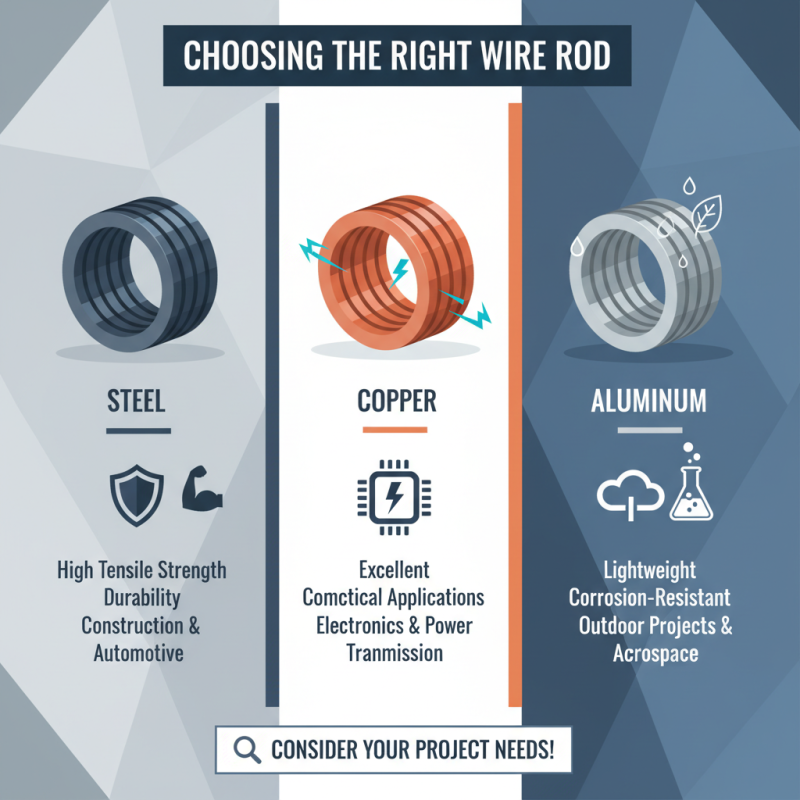
Choosing the right wire rod for your project requires understanding different materials. Wire rods come in various types, each with unique properties. Steel wire rods are common. They offer high tensile strength and durability. Copper wire rods excel in conductivity. They're often used in electrical applications. Aluminum rods are lightweight and corrosion-resistant, suitable for outdoor projects.
When selecting wire rods, consider the specific requirements of your project. For heavy-duty applications, opt for steel. For wiring, copper is optimal. Thinking about the environment is key. Corrosion-resistant options like aluminum may save future hassle.
**Tips:** Always check the tensile strength. It influences performance. Consider the environment where the rod will be used. If uncertain, consult a materials expert. Researching properties helps avoid mistakes. Choices can seem overwhelming, but understanding your needs can guide you.
The Importance of Diameter in Wire Rod Selection for Structural Integrity
Choosing the right wire rod for your project can be challenging. One critical aspect is the diameter of the wire rod. The diameter significantly affects the structural integrity of your construction. A thicker diameter often offers more strength. However, it can also add unnecessary weight. In some cases, a smaller diameter might suffice for the design.
Before making a decision, you need to consider the specific load the wire rod will bear. If the load is heavy, opt for a larger diameter. But be cautious about overestimating strength. Overbuilding can lead to wasted resources. A careful balance is essential. Sometimes, consulting with an expert can reveal overlooked factors.
The material used with the diameter can also impact your choice. Different materials behave differently under stress. For instance, some metals may bend or deform more easily despite a larger diameter. Pay attention to these details to ensure long-term viability. Evaluate the environment as well. Corrosion or other factors might necessitate a different approach.
How to Choose the Right Wire Rod for Your Project? - The Importance of Diameter in Wire Rod Selection for Structural Integrity
| Diameter (mm) |
Tensile Strength (MPa) |
Yield Strength (MPa) |
Applications |
Weight (kg/m) |
| 5 |
600 |
350 |
Construction, Fencing |
0.156 |
| 10 |
580 |
320 |
Reinforcement Bars, Frames |
0.393 |
| 12 |
550 |
300 |
Automotive, Machinery |
0.506 |
| 16 |
520 |
290 |
Construction, Bridge Building |
0.785 |
| 20 |
500 |
270 |
Heavy Machinery, Industrial Uses |
1.572 |
Evaluating Surface Treatment Options for Enhanced Durability and Performance
When selecting a wire rod, the surface treatment options you choose can significantly impact the final product's durability and performance. Various treatments, such as galvanizing or coating, provide different benefits. Each option has its own suitability depending on the specific use case. For outdoor projects, selecting a corrosion-resistant surface treatment is crucial.
Tip: Assess the environment where the wire rod will be used. If it faces harsh weather, a robust treatment can save future costs on repairs. Consider the thickness of coatings as well; sometimes, thinner layers can wear off faster than anticipated.
Another aspect to reflect on is the longevity of the treatment itself. Some might promise high resistance but fail under certain conditions. Be wary of promotional claims and look for user reviews. It may take longer to find the right fit, but the effort pays off in performance.
Tip: Test samples before fully committing. A small test can reveal a lot about how well a surface treatment holds up. Sometimes, experimenting with different rods in real-world conditions is necessary. Adjust your expectations based on the results, and factor in potential challenges.
Surface Treatment Options for Wire Rods
This chart illustrates the performance of various surface treatments for wire rods based on durability and corrosion resistance. The treatments compared are Galvanization, Annealing, Phosphating, and Polymeric Coating.
Cost Analysis: Budgeting for the Right Wire Rod in Your Project
Budgeting for wire rods can feel overwhelming. Start by determining the specifications you need. Different projects require different types of wire rods. Your choice can significantly impact your overall costs. For instance, stainless steel may be more expensive than mild steel. However, the durability could save you money in the long run.
Researching is essential. Prices can vary widely depending on the supplier. Get multiple quotes to find the best deal. Sometimes, local suppliers may offer better prices than online options. Keep an eye on the market trends. Prices fluctuate based on demand and raw materials. Ignoring these factors can lead to unforeseen expenses.
It's also wise to factor in additional costs. Don't forget about shipping, handling, and taxes. These can add up quickly. According to some estimates, they can increase your budget by 10-15%. Always leave a little wiggle room in your budget. It’s common to encounter unexpected costs. Planning for these can help you avoid stress later.