Top Stainless Steel Wire Manufacturers Worldwide
Choosing among the top stainless steel wire manufacturers worldwide requires more than comparing prices or polished websites. The real differences appear in production details: alloy consistency, tensile strength, diameter tolerance, surface finish, and batch traceability. A reliable manufacturer should explain whether its wire meets standards such as ASTM, EN, or ISO requirements. It should also provide inspection records, material certificates, and practical support after delivery.
Small details matter.
A 0.02-millimeter variation can affect spring performance, medical components, welding systems, or woven mesh stability. Manufacturers serving demanding industries usually combine controlled drawing processes, suitable annealing, precise testing, and experienced quality teams. Their facilities may include bright-wire lines, spooling equipment, and laboratories measuring hardness, elongation, and corrosion resistance. W. Edwards Deming, a leading authority on industrial quality, said, “Quality comes not from inspection, but from the improvement of the production process.” His principle remains relevant to stainless steel wire production today.
This guide examines global manufacturers through product capability, technical reliability, certifications, delivery performance, and application experience. It does not treat company size as proof of quality. A large supplier may still offer limited grades or inconsistent communication. A smaller producer may provide better customization and faster technical responses. That uncertainty deserves attention. Readers should verify current certifications, factory capacity, and sample performance before making a final decision. The strongest choice is rarely the loudest one; it is the manufacturer whose evidence remains convincing under close examination.
Stainless Steel Wire: Definition, Grades, and Core Properties
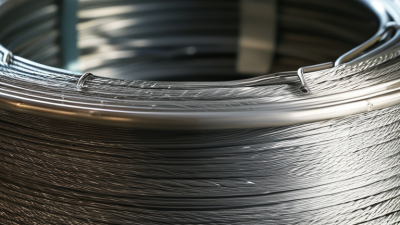
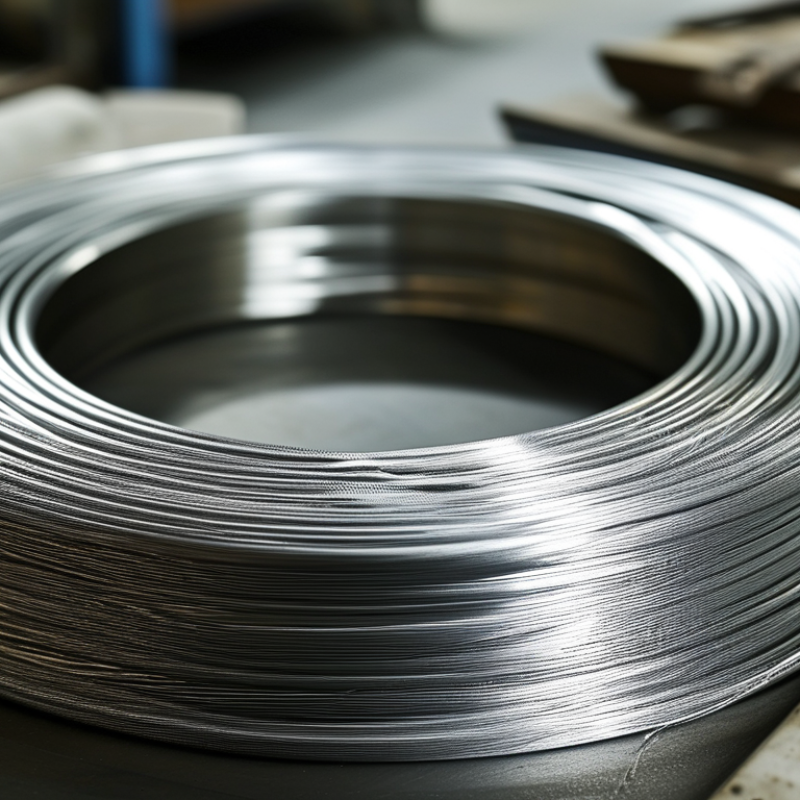
Stainless steel wire is a drawn metal product made from corrosion-resistant stainless steel. Manufacturers reduce the rod’s diameter through controlled dies. This process improves dimensional accuracy and can increase tensile strength. The finished wire may be bright, matte, annealed, or spring-hard.
Grade selection depends on the working environment. Grade 304 offers balanced corrosion resistance, ductility, and weldability for general industrial use. Grade 316 contains molybdenum, which improves resistance to chlorides and coastal exposure. Grade 302 is often chosen for spring applications because it develops useful strength during cold working. Grade 430 is magnetic and economical, but it generally provides less corrosion resistance than austenitic grades.
Core properties include tensile strength, elongation, hardness, surface condition, and electrical conductivity. Wire diameter also matters. A small dimensional error can affect spring force, weaving quality, or automated feeding. It is not magic. Processing changes performance.
In practical purchasing, I check the material certificate, heat number, diameter tolerance, and test method. These details help connect laboratory results with production behavior. Corrosion resistance is not absolute; stagnant water, salt deposits, and poor cleaning can still cause staining. No grade is perfect. Selecting wire only by price often creates hidden costs through breakage, replacement, or inconsistent forming. Temperature, load cycles, bending radius, and surface contact should guide the final specification.
Top Stainless Steel Wire Manufacturers Worldwide - Stainless Steel Wire: Definition, Grades, and Core Properties
Stainless steel wire is a continuous metallic product made from corrosion-resistant steel. Its performance is mainly determined by chromium, nickel, and molybdenum content, together with the grade and manufacturing condition.
The chart shows representative nominal alloying-element levels by weight for widely used stainless steel grades. Chromium supports passivation and corrosion resistance, nickel improves ductility and stabilizes the austenitic structure, while molybdenum enhances resistance to pitting and crevice corrosion. Actual wire chemistry may vary within the applicable material standard.
How Stainless Steel Wire Is Manufactured
Stainless steel wire starts with chemistry, not the drawing machine. Producers melt stainless scrap, virgin iron, nickel, and chromium in an electric arc furnace. Argon-oxygen decarburization then lowers carbon while preserving chromium. Continuous casting forms billets, which are reheated and hot-rolled into wire rod. According to the International Stainless Steel Forum’s 2023 production statistics, global crude stainless production reached about 58.4 million tonnes. This scale makes process control essential.
After hot rolling, workers remove oxide scale by shot blasting, grinding, or chemical pickling. The rod then passes through carbide or diamond dies. Each pass reduces diameter and raises strength through cold work. It is not forgiving. Intermediate annealing restores ductility when the metal becomes too hard to draw. Final cleaning may use nitric or citric-based passivation, depending on the specification. ASTM A580/A580M commonly guides stainless wire requirements, including dimensions and mechanical testing.
Quality checks are physical, not merely visual.
Technicians measure diameter, tensile strength, elongation, surface defects, and corrosion performance. Eddy-current testing can detect discontinuities along long coils. I would not treat a bright surface as proof of quality. Stress hides. Small furnace or die-temperature changes may later cause breakage, uneven springback, or poor fatigue life. Reliable manufacturers record heat numbers, drawing schedules, lubrication, and test results for every shipment.
Leading Stainless Steel Wire Manufacturers by Global Region
Top Stainless Steel Wire Manufacturers Worldwide
Leading Stainless Steel Wire Manufacturers by Global Region
Regional strength shapes the stainless steel wire market. The International Stainless Steel Forum reported global stainless steel production of about 62 million tonnes in 2024. This expanded raw-material base supports wire production across several industrial centers. However, wire output is not equal to steel output. That distinction matters.
East Asia remains the largest manufacturing hub, supported by extensive melting, drawing, and finishing capacity. Producers there often supply construction mesh, fasteners, springs, and electronics components. European manufacturers compete through tighter tolerances, surface control, and specialized grades. Their wire is widely used in medical instruments, automotive systems, and energy equipment. North American facilities focus strongly on traceability, domestic supply, and demanding engineering applications.
India and Southeast Asia are gaining attention. Their advantages include expanding industrial investment, skilled labor, and improving export infrastructure. The U.S. Geological Survey continues to identify stainless steel as an important input for durable manufactured goods, although it does not separately measure every wire category. Market estimates from commercial research firms also indicate steady growth through the decade.
The ranking remains imperfect. Public reports often combine wire rod, drawn wire, and finished products. Buyers should verify tensile strength, diameter tolerance, coil weight, heat records, and third-party certifications. A polished catalog is not enough. Factory audits reveal more. Regional logistics, energy costs, and import duties can quickly change a supplier’s real value.
Product Categories and Industry Applications
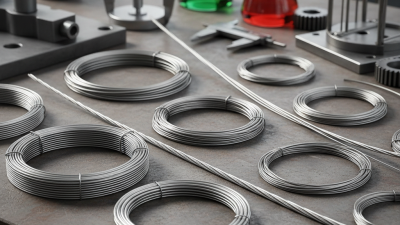
Stainless steel wire is not one universal product. Manufacturers commonly supply round wire, flat wire, shaped wire, spring wire, welding wire, and wire rope strands. Each category responds to a different production need. Round wire supports fasteners, woven mesh, and precision forming. Flat wire suits seals, clips, and compact electrical contacts. Spring wire must balance tensile strength with fatigue resistance. Small differences matter.
Grade selection depends on corrosion exposure, temperature, forming method, and required surface finish. Austenitic grades often serve food equipment, medical instruments, and architectural systems because they combine formability and corrosion resistance. Ferritic and martensitic options can fit magnetic parts, wear components, or heat-related duties. Duplex wire may support marine structures and chemical processing where strength and chloride resistance are important. These choices require verified chemistry, diameter tolerance, tensile data, and traceability.
In real purchasing work, application details are often incomplete. A bright surface can look impressive, yet it may hide unsuitable fatigue performance. Ask for test reports, heat numbers, coating information, and dimensional inspection records. For electronics, stable conductivity and clean handling may matter more than appearance. For construction mesh, weldability and consistent coil shape can reduce installation delays. For medical or food-contact uses, controlled processing and documented cleanliness deserve close review. No category is automatically best. A careful comparison usually exposes compromises in cost, strength, finish, and service life.
Quality Standards, Sustainability, and Supplier Selection
Selecting among top stainless steel wire manufacturers worldwide requires more than comparing price lists. Quality begins with documented grades, controlled drawing processes, and repeatable testing. Ask for mill certificates, tensile strength results, dimensional tolerances, and surface inspection records. A reliable manufacturer should trace each coil to its production batch. During supplier visits, inspect storage areas. Moisture and mixed labels can create costly problems.
Sustainability needs evidence, not attractive promises. Review recycled steel content, electricity sources, water treatment, packaging choices, and waste-reduction records. Request measurable targets and recent audit documents. Some suppliers report environmental progress clearly; others provide vague statements. That difference matters. A lower-impact process may also reduce material loss and improve long-term cost control.
Tips: Order samples before signing a large contract. Test straightness, diameter consistency, corrosion resistance, and weld performance under your real conditions. Check lead times across several orders, not just one successful shipment. Discuss corrective actions before problems occur. No manufacturer is perfect. I have found that honest reporting of a failed batch often builds more trust than polished claims. Compare communication quality, technical support, minimum order quantities, and contingency plans. A strong supplier responds with data, not excuses.