What is Wire Steel and Its Applications in Industry?
Wire steel plays a crucial role in various industries due to its exceptional strength and flexibility. According to a report from Grand View Research, the global wire rod market is expected to exceed $200 billion by 2027, driven by increased demand in construction and automotive sectors. These sectors rely heavily on wire steel for reinforcement and other applications.
Wire steel is utilized in many forms, such as springs, cables, and fasteners. Each application demands specific properties that wire steel can provide. For instance, the automotive industry requires wire steel for resilience and safety. A study by the International Steel Association noted that wire steel components improve vehicle durability by up to 20%.
However, the wire steel industry faces challenges. Fluctuating raw material prices and environmental regulations can impact production costs. The need for sustainability is critical. Companies are exploring alternative materials and recycling methods. These efforts reflect an industry in transition, balancing innovation with responsibility.
What is Wire Steel?
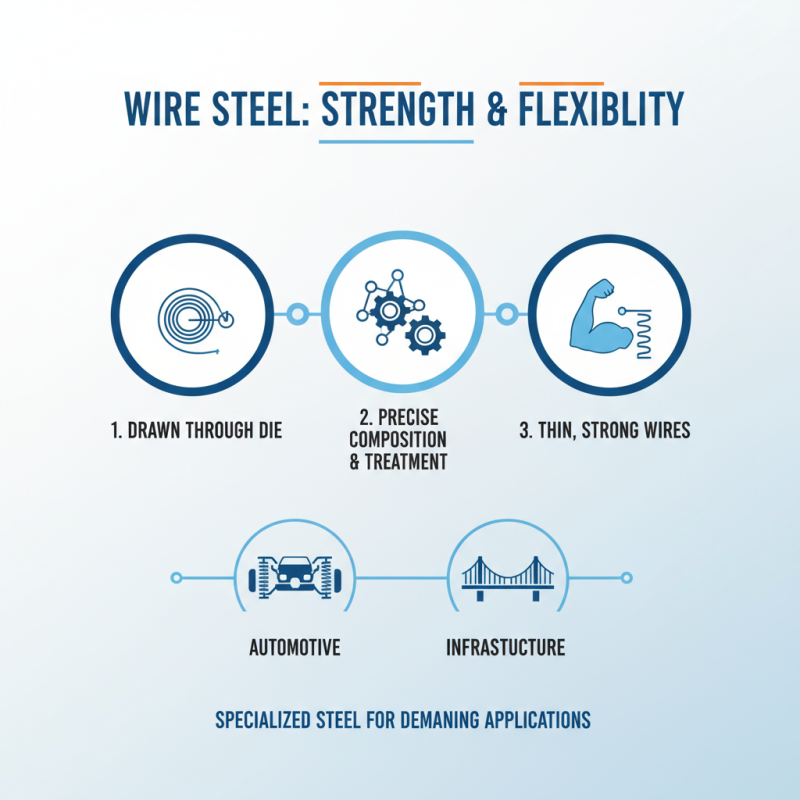
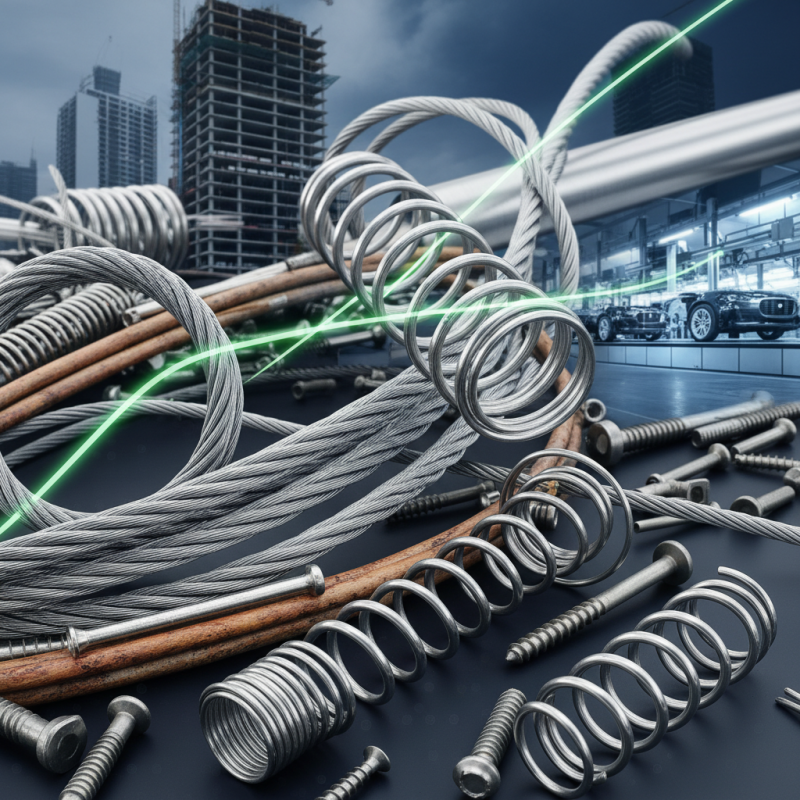
Wire steel is a specialized type of steel designed for strength and flexibility. It is made by drawing steel through a die, resulting in thin wires that can be utilized in various applications. The manufacturing process often involves precise control over the steel’s composition and treatment. This helps achieve the desired mechanical properties.
Its applications span across multiple industries. In construction, wire steel is used for reinforcing concrete, providing enhanced structural integrity. In the automotive sector, it contributes to the manufacturing of springs and cables. The agriculture industry also benefits; wire steel is employed in fencing and machinery.
Despite its many uses, wire steel has limitations. It can be susceptible to corrosion if not properly treated. Additionally, some processes can cause it to become brittle over time. These imperfections remind manufacturers of the need to constantly innovate and refine their techniques in wire steel production. Understanding these challenges is crucial for ensuring the durability and performance of wire steel in tough environments.
Composition and Properties of Wire Steel
Wire steel is an alloy that exhibits unique properties. It primarily consists of iron and carbon, with varying levels of other elements like manganese and silicon. This composition affects its hardness, ductility, and tensile strength. High carbon content increases hardness; however, too much can make it brittle. Striking the right balance is crucial for most applications.
The properties of wire steel make it versatile in many industries. It is used in construction for reinforcing concrete. Its strength significantly enhances the structural integrity of buildings. In the manufacturing sector, wire steel is common for producing springs and cables. These items require elasticity and strength, which wire steel provides. Yet, issues like corrosion resistance still need addressing in some applications.
While wire steel has many benefits, its performance is not infallible. In certain environments, it can rust or wear down. Regular maintenance and protective coatings can help. Despite ongoing advancements, challenges remain in optimizing its properties for specific tasks. Understanding these nuances is crucial for effective use in industry.
Manufacturing Processes of Wire Steel
Wire steel is notable for its versatility in various industrial applications. The manufacturing processes involved in producing wire steel are intricate and diverse. Typically, wire steel begins with melting scrap metal or raw materials in an electric arc furnace. This method achieves a temperature exceeding 1,600°C. Such high temperatures are crucial for obtaining the desired quality.
Following this, the steel undergoes a process called wire drawing. It involves pulling the steel through a series of dies, reducing its diameter and increasing its length. This step is essential for achieving the strength and flexibility needed in many applications. Industry reports indicate that the global wire rod market is projected to grow by over 3% annually, driven primarily by the construction and automotive sectors.
Quality control is critical throughout these processes. Many manufacturers employ rigorous testing methods, such as tensile strength tests and microstructure analysis. Despite advancements, flaws occasionally arise. Some batches may not meet the required standards. Reflections on these imperfections lead to continuous improvements. Ensuring quality in wire steel remains a ongoing challenge within the industry. Data from recent studies emphasize that using innovative techniques can significantly enhance the production process and end product quality.
Applications of Wire Steel in Various Industries
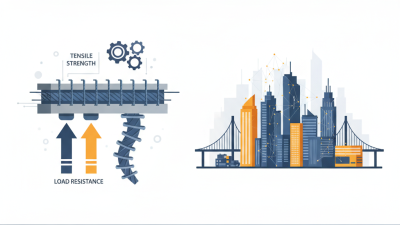
Wire steel is widely used in various industries due to its strength and versatility. In construction, it serves a critical role. Reinforcing bars made of wire steel enhance the durability of concrete structures. These bars are essential for ensuring integrity in skyscrapers and bridges. Their high tensile strength allows them to withstand heavy loads, which is crucial in urban settings.
In the automotive sector, wire steel is also prevalent. It is used in the production of springs and wires for electrical systems. These components must endure harsh conditions. The reliability of wire steel ensures safety and performance in vehicles. However, the manufacturing process can sometimes introduce quality inconsistencies. This highlights the need for stringent quality control measures.
Moreover, wire steel finds applications in the textile industry. It is employed to create fine wire mesh for filtering and separation processes. This mesh is vital in maintaining product integrity. Nevertheless, the flexibility of wire steel can lead to challenges in mesh construction. Each application demands careful consideration and sometimes requires innovative solutions to overcome obstacles.
Applications of Wire Steel in Various Industries
Advantages and Disadvantages of Using Wire Steel
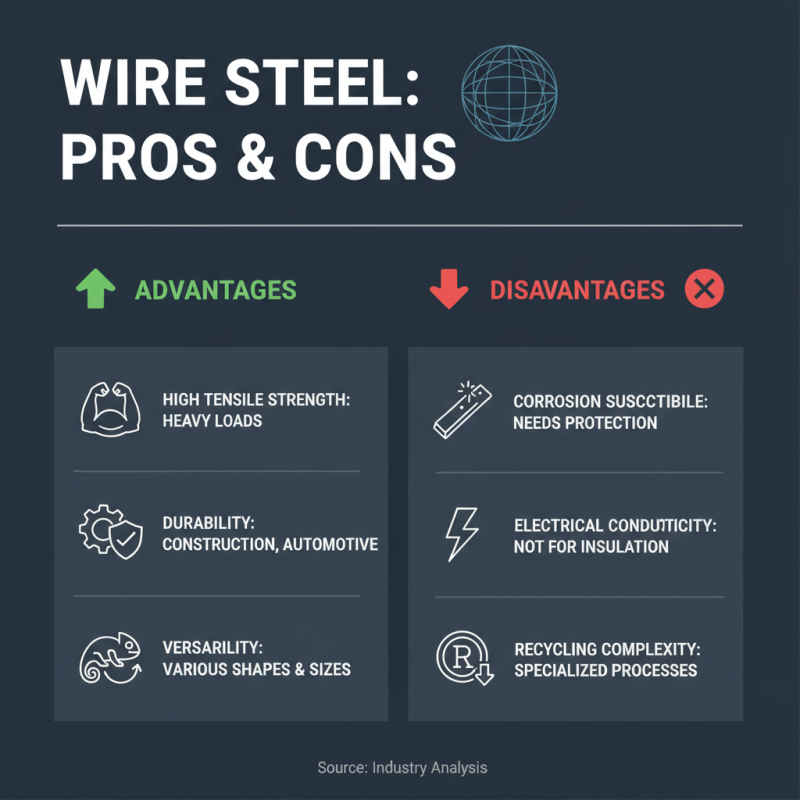
Wire steel, a crucial material in various industries, offers distinct advantages and disadvantages. One significant advantage is its high tensile strength. This property allows wire steel to handle heavy loads effectively. Its durability also makes it suitable for numerous applications, from construction to automotive components. Additionally, wire steel is versatile. It can be drawn into different shapes and sizes, catering to diverse industrial needs.
However, there are limitations to consider. Wire steel can be prone to corrosion if not properly treated. This vulnerability may lead to structural failures under adverse conditions. Also, the manufacturing process can be energy-intensive, raising environmental concerns. While wire steel is often favored for its strength, its long-term impact on sustainability is debatable. Striking a balance between using wire steel and considering greener alternatives is essential. The industry must reflect on these challenges as it moves forward.