What Is Hot Rolled Steel Bar A Buyers Guide?

Buying hot rolled steel bar involves more than comparing prices per ton. The right choice affects machining, welding, structural performance, and project schedules. This guide explains the practical details buyers should check before placing an order.

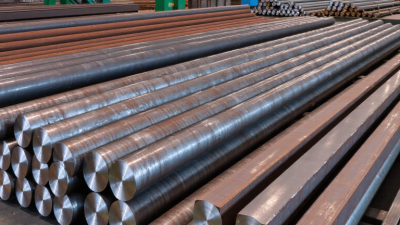
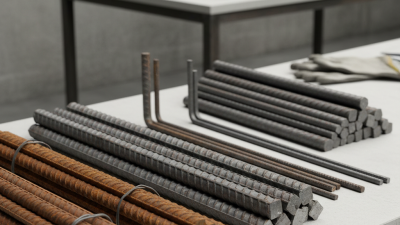
Hot rolled steel bar is formed at high temperatures, creating a recognizable scaled surface and slightly less precise dimensions than cold-finished products. That difference matters. A bar intended for a machined shaft may need extra allowance, while a fabrication project may prioritize weldability and reliable supply. Buyers should confirm the steel grade, diameter, length, tolerance, surface condition, straightness, and available stock. Small details can become expensive problems.

Ask for a mill test certificate.

A credible supplier should provide traceable material information, including chemical composition and mechanical test results. Compare these records with the applicable project specification, such as ASTM, EN, or another recognized standard. Do not rely on grade names alone. Similar labels can carry different requirements across regions and suppliers.

Inspection experience also matters. Check random bars for visible cracks, deep rust, severe scale, bends, or inconsistent dimensions. A caliper, measuring tape, and clear photographs can reveal issues before shipment. Still, visual checks cannot replace professional testing when safety or certification is critical. I have seen buyers focus heavily on unit price and overlook cutting charges, freight, packaging, or machining waste. That approach deserves reconsideration. A dependable purchase balances performance, documentation, lead time, and total cost—not just the number on the quotation.
What Is Hot Rolled Steel Bar A Buyers Guide?

What Is Hot Rolled Steel Bar?

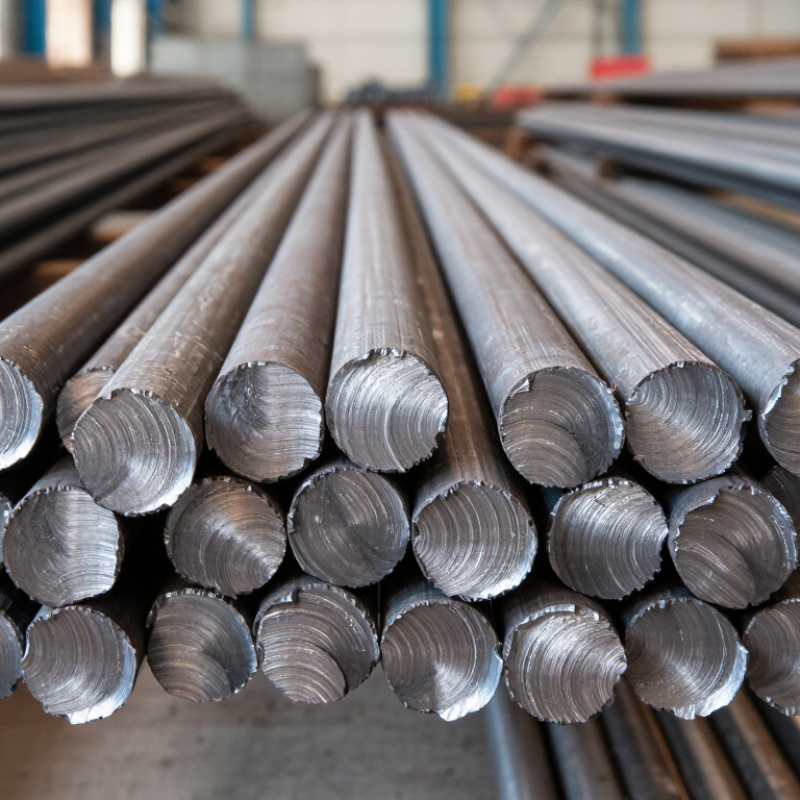
Hot rolled steel bar is steel shaped at high temperatures, usually above its recrystallization point. Mills heat billets until they become red-orange and pass them through rollers. This process creates round, square, flat, or rectangular bars. The result is strong, practical material with a naturally rough surface and slightly rounded edges. It is widely used for frames, supports, shafts, brackets, and general fabrication.

Hot rolled bars are not precision-perfect. Their dimensions may vary slightly, and scale can remain on the surface. That roughness is useful for structural work, but it may require grinding before painting or machining. In my experience, buyers sometimes focus only on price. That can be a mistake. Check the grade, diameter, length, straightness, surface condition, and mechanical test results. A reliable mill certificate should identify the heat number and tested properties. The bar must also match the working environment, especially where moisture, impact, or repeated loading is expected.

Tips: Measure several points along each bar, not just one end. Inspect for deep cracks, severe bends, or unusual pits. Confirm the required standard before ordering. Ask whether the quoted weight includes cutting waste. A small allowance for machining can prevent expensive rework. Still, every project differs, so technical review remains worthwhile.

How Is Hot Rolled Steel Bar Manufactured?

Hot rolled steel bar begins as a cast billet, usually produced from carbon or alloy steel. The billet enters a reheating furnace and reaches roughly 1,100–1,250°C. At this temperature, the steel becomes workable without melting. Heat must be distributed evenly. Uneven heating can create surface defects or dimensional variation.

After heating, high-pressure water removes loose scale from the billet surface. The billet then passes through several grooved rolls. Each pass reduces its section and gradually forms a round, square, or flat bar. Rolling speed, roll alignment, and temperature require constant monitoring. The bar leaves the finishing stand at a controlled size. It is then cooled, straightened, cut to length, and inspected. Tests may check dimensions, surface condition, hardness, and chemical composition. In practice, temperature control is not always perfect. That is why experienced operators review records instead of trusting appearance alone.

Tips: Ask for the steel grade, size tolerance, heat-treatment condition, and test documentation. Check bars under good lighting for deep seams, cracks, heavy scale, or bends. A smooth surface is useful, but it does not prove internal quality. Confirm the intended application before ordering, because a construction bar and a machined bar may need different properties. Small differences matter.

What Is Hot Rolled Steel Bar? A Buyer’s Guide

Hot rolled steel bars are manufactured by heating steel billets above their recrystallization temperature and passing them through a series of rolling stands. The typical temperature profile shows how the billet is reheated, reduced during roughing, shaped during finishing, and then transferred to a cooling bed. Actual temperatures vary according to steel grade, bar size, rolling mill design, and production speed.

What Are the Main Types and Grades?

Hot rolled steel bars are shaped above their recrystallization temperature, then cooled in open air. This process leaves a dark mill-scale surface and slightly wider dimensional tolerances. For buyers, the bar’s shape matters first. Round bars suit shafts, pins, axles, and general fabrication. Square bars work well for frames, supports, and welded assemblies. Flat bars fit brackets, base plates, and repair work. Hexagonal bars are useful when a wrench-friendly profile is needed.

Grades describe chemistry, strength, and practical performance. A36 is a common low-carbon structural grade for general fabrication and welding. 1018 offers good machinability and moderate strength, although availability and condition should be confirmed. 1045 contains more carbon, giving higher strength after suitable heat treatment, but it generally welds less easily. 4140 is a chromium-molybdenum alloy steel used where toughness and wear resistance are important. It may require controlled welding and heat treatment.

Do not select a grade from strength alone. Check the required standard, bar diameter, straightness, surface condition, and test certification. A mill certificate should identify chemical composition and mechanical results. Ask whether the bar is normalized, annealed, or supplied as-rolled. As-rolled material can vary more than expected. That detail is easy to miss.

In practice, I would compare the drawing tolerance with the bar’s actual tolerance before ordering. Machining allowance also affects cost. A cheaper bar may become expensive after excessive cutting or surface removal. Supplier data deserves verification, not blind trust.

What Properties and Applications Does It Have?

What Is Hot Rolled Steel Bar? A Buyer’s Guide

What Properties and Applications Does It Have?

Hot rolled steel bar is formed at temperatures above the steel’s recrystallization point. The process makes large sections practical and relatively economical. After rolling, the surface often carries dark mill scale. Its edges may look less precise than cold finished bar. That appearance is normal, not automatically a defect.

The main properties include good ductility, dependable toughness, and useful tensile strength. Exact performance depends on the grade, diameter, cooling method, and heat treatment. Hot rolled bar is usually easier to cut, drill, weld, and machine than highly hardened steel. However, its dimensional tolerance is broader. A buyer expecting a bright, perfectly straight surface may choose the wrong product. I have seen this assumption create unnecessary rework. Check the required tolerance before ordering.

Common applications include structural frames, base plates, brackets, axles, shafts, and general fabrication. Thick bars can support heavy loads in industrial equipment and construction assemblies. Round bars suit pins and rotating parts, while flat bars work well for supports and fixtures. Carbon grades are common for everyday fabrication, but alloy grades may offer better wear resistance or strength. Welding still requires attention to carbon content and preheating needs. Do not judge suitability by strength alone. Corrosion exposure, machining allowance, loading direction, and service temperature also matter. Supplier test certificates and traceable heat numbers provide useful purchasing confidence.

How Should Buyers Select and Purchase It?

Hot rolled steel bar is shaped at high temperatures, usually above its recrystallization range. This process improves production efficiency and supports many structural applications. However, the surface often carries dark mill scale, rounded edges, and wider dimensional tolerances than cold finished bar.

Buyers should begin with the service conditions, not the supplier’s product list. Define the required diameter, length, steel grade, mechanical strength, weldability, and corrosion environment. A 25 mm bar for a welded frame may need different chemistry than one used for machined components. Check the applicable standard carefully. Similar grade names can hide different carbon limits or testing requirements.

Ask for a mill test certificate showing heat number, chemical composition, yield strength, tensile strength, and elongation. Match that heat number with the bundle marking. Important details. Confirm straightness, cutting tolerance, surface condition, and the acceptable amount of scale before ordering. If the bar will be machined, include the expected material removal in your size calculation. Buying only by weight can create costly shortages.

Inspect a sample when possible. Measure several points along the bar, because one end may not represent the whole bundle. Packaging should prevent mixing of sizes and grades during transport. Delivery terms, inspection responsibility, and replacement procedures should be written clearly. A smooth-looking surface is not proof of better internal quality. I would also question unusually low prices; they may reflect thinner dimensions, incomplete testing, or unsuitable grade selection. Recheck the specification before payment.

What Is Hot Rolled Steel Bar A Buyers Guide? - How Should Buyers Select and Purchase It?
Buying Dimension What Buyers Should Check Reference Data / Typical Options Selection and Purchasing Guidance
Manufacturing Process Confirm that the bar is hot rolled rather than cold drawn, peeled, or forged. Hot rolling is performed above the steel's recrystallization temperature and normally leaves a mill-scale surface with a less precise dimensional finish than cold-finished bar. Choose hot rolled bar for structural parts, general fabrication, welding, and applications where moderate dimensional precision is acceptable.
Bar Shape Specify round, square, flat, hexagonal, or another required cross-section. Round bar is commonly used for shafts, pins, axles, and machined components. Flat and square bars are commonly used for brackets, frames, supports, and fabrication. Match the shape to the machining allowance, load direction, welding design, and available cutting equipment.
Steel Grade Check the applicable material standard and the required mechanical and chemical properties. ASTM A36: minimum yield strength commonly specified as 250 MPa and tensile strength as 400–550 MPa for applicable products.
EN S275JR: minimum yield strength of 275 MPa for nominal thickness up to 16 mm.
EN S355JR: minimum yield strength of 355 MPa for nominal thickness up to 16 mm.
SAE/AISI 1045 and 4140: properties depend strongly on size, heat treatment, and supply condition.
Do not select a grade by name alone. Confirm the exact standard, product form, thickness range, delivery condition, and certificate values.
Impact Toughness Determine whether the application requires impact testing at a specified temperature. In EN 10025 designations, “JR” indicates a minimum Charpy V-notch impact energy of 27 J at +20°C. For low-temperature service, select the appropriate impact class and require the test temperature and results on the material certificate.
Dimensions Specify diameter, width, thickness, across-flats size, and permitted dimensional tolerance. Hot rolled dimensions and tolerances vary by product standard, size range, and bar shape. They are not interchangeable with cold-finished tolerances. State the standard tolerance directly on the purchase order and allow sufficient machining stock where close final dimensions are required.
Length Choose random length, fixed length, or cut-to-length supply. Random and fixed-length availability depends on the mill, section size, standard, and order quantity. Length tolerances must be agreed in the order. Use fixed lengths to reduce cutting waste, but compare the additional cutting and handling cost with the savings in material utilization.
Surface Condition Identify whether mill scale, rust staining, pits, seams, or surface defects are acceptable. Standard hot rolled bar normally has a dark mill-scale surface. Pickling, shot blasting, or other descaling may be available as a separate condition. For painting, plating, or precision machining, include a surface-preparation requirement and an agreed defect-acceptance criterion.
Weight Calculation Estimate theoretical weight for budgeting, freight, and inventory planning. Round bar: kg/m = 0.006165 × diameter², with diameter in millimetres.
Flat bar: kg/m = 0.00785 × width × thickness, with dimensions in millimetres.
Use theoretical weight for estimates only. Final invoicing may be based on actual weight, and mill tolerances can affect the result.
Weldability Review carbon level, carbon equivalent, thickness, restraint, and welding procedure requirements. Low-carbon structural grades such as many A36 and S275 applications are generally easier to weld than medium-carbon 1045 or alloy 4140 bars. For 1045, 4140, or thick sections, obtain qualified welding recommendations covering preheating, interpass temperature, filler metal, and post-weld treatment.
Machinability Consider grade, hardness, delivery condition, machining allowance, and production volume. Medium-carbon grades such as 1045 generally offer a balance of strength and machinability. Alloy grades such as 4140 can require more controlled cutting conditions, especially after hardening. Select the supply condition before comparing prices; normalized, annealed, and quenched-and-tempered material can machine differently.
Inspection Documents Require traceability and inspection documentation appropriate to the application. An EN 10204 Type 3.1 inspection certificate typically provides heat number, chemical analysis, mechanical test results, product standard, and delivery condition. For safety-critical or regulated parts, specify certificate type, test scope, marking, heat traceability, and any third-party inspection before production.
Corrosion Protection Decide how the bar will be protected during storage, transport, and service. Uncoated hot rolled steel is not inherently corrosion-resistant and can develop rust when exposed to moisture and oxygen. Specify dry indoor storage, protective oil, desiccant packaging, coating, or a subsequent painting/galvanizing process when required.
Purchase Order Details Ensure every technical requirement is written clearly and can be verified at receiving inspection. A complete order normally includes grade, standard, shape, dimensions, tolerance, length, quantity, delivery condition, surface condition, marking, packaging, and certificate requirements. Ask for a pre-production confirmation and check the received bars against the order, markings, dimensions, visual condition, weight, and material certificate.
Buyer’s note: Mechanical properties, dimensional tolerances, availability, and acceptable surface conditions depend on the exact product standard, size, heat, and delivery condition. Always verify the current standard and material certificate before purchase.